Search This Blog

Showing posts with label al qaeda. Show all posts

Sunday, May 3, 2015

Every Insurgency Is Different


CHICAGO — America faces a wide array of insurgencies across the globe, from the Islamic State in Iraq and Syria to the Taliban in Afghanistan, each one different in its aims, structures and strategies. So why do the United States and its allies take pretty much the same approach to all?
A “surge” briefly stabilized Iraq, but the same strategy failed in Afghanistan. Internationally backed negotiations succeeded in Bosnia, but have so far failed in Syria. Israel’s targeting of Hamas leaders has not degraded the group, even as the deaths of factional leaders have sowed confusion within the Pakistani Taliban.
This track record is spotty because the insurgents themselves vary tremendously, particularly in the social networks among their leaders, and between those leaders and the local communities in which they operate. All insurgents are not created equal, and so strategies need to be matched to the specific strengths and weaknesses of a group.
That said, it is possible to categorize insurgent groups as one of three primary types. The first, what we might call “integrated groups,” like the Afghan Taliban, rely on robust social networks to link leaders to one another and to local communities. They are resilient and cohesive: Despite various local feuds and internal disagreements, the Afghan Taliban have never collapsed into internecine warfare.
That cohesion helps to explain why the huge, decade-long American investment in counterinsurgency in Afghanistan has largely failed. Integrated groups can survive many of the standard prescriptions of counterinsurgency doctrine, leading to long, bloody conflicts. Only intense, often brutal, warfare, like Sri Lanka’s campaign against the Tamil Tigers, is likely to destroy or contain them.
Because organizations like the Afghan Taliban are unlikely to collapse quickly, governments need to consider deal-making as an alternative to protracted warfare, even if the groups pursue undesirable goals. They are cohesive enough to bargain with the government or international community, allowing them to implement agreements without splintering.
Insurgent organizations in another category, “vanguard groups,” have a tight leadership core but weak pre-existing links to local communities. They often emerge when urban, elite or foreign fighters try to mobilize parts of society with which they have few ties. Their cohesion lets them move fast and effectively, as the Bolsheviks did in Russia in 1917, or as Al Qaeda in Iraq did in the first years after the American invasion.
But unless they quickly embed themselves in local communities, vanguards are vulnerable to dissent and disobedience from below. That’s why Al Qaeda in Iraq was so susceptible to the Sunni Awakening in 2007. Similarly, the Islamic State has been able to rapidly expand as a vanguard, but its major weakness remains the possibility of counterrevolt by wary local allies.
Vanguard groups are also vulnerable to a wider range of government strategies than integrated groups. If their leadership is quickly eliminated or politically co-opted, the organization crumbles. The key to counterinsurgency against them, then, is to quickly target leaders while preventing these groups from rebuilding.

Vanguards present difficult dilemmas for peace processes, however: Even if leaders agree to a deal, they may not be able to persuade their local units to go along. Negotiating partners therefore need to actively bolster the leadership of such groups in order to prevent dissension and encourage unity — in other words, peace may require that a government support the leaders of a group it has long been fighting.
Groups in a third type, “parochial insurgents,” have a fragmented leadership splintered across powerful factions, despite existing under a shared organizational banner. They often emerge from loose alliances among distinct local networks. Their local ties make them militarily formidable, but leadership divisions leave them prone to internal splits.
The Pakistani Taliban is a classic parochial insurgent group that has been plagued by infighting, side-switching and an inability to build and maintain coherent strategies, even as it has been able to impose heavy costs on Pakistan’s government and society. These internal rivalries have triggered brutal violence against civilians to try to show a faction’s power, as in the group’s recent attack on a school in Peshawar. (Parochial groups shouldn’t be confused with truly fragmented organizations, like some of the non-ISIS groups fighting in Syria; such groups are fatally undermined by the complete absence of central leadership and are easily marginalized.)
Dealing with parochial groups presents a distinct challenge. Targeting the overall leadership — whether through violence or negotiations — is not very productive, since central control is weak. Killing top leaders may affect only their own faction, not the broader organization. Counterinsurgents are instead forced into long and messy campaigns focused on imposing state control at the local level.
Peace is also hard to negotiate and implement with parochial groups. Because of the weakness of central leaderships, local factions must be approached individually, an often protracted and byzantine process. Rather than grand bargains or overarching settlements, peace with parochial groups is built through live-and-let-live deals, cease-fires and local accommodations.
This diversity among insurgent groups means that some strategies that work in one place might be counterproductive in another. There is no such thing as counterinsurgency doctrine; rather, doctrines and strategies have to be tailor-made to unique situations, based on a careful study of the groups and the political, social and economic contexts in which they operate. Only then can America and its allies hope to stabilize conflict-weary regions of the world.
Paul Staniland is an assistant professor of political science at the University of Chicago and author of “Networks of Rebellion: Explaining Insurgent Cohesion and Collapse.”

Wednesday, April 29, 2015

IF THEY SHUT DOWN ALL THE ISIS WEB SITES DOESN'T THAT LIMIT INTEL?


The fact is the Web Sites we shut down are the Media machine not the actual First reporting sources. (i.e. the NOT the Actual Bad Guys) ISIS hunters and almost more so, normal everyday people report stuff to various Anonymous groups, to me (since 2007)  and some contact Gov Orgs and Host directly. People like me and many of the Anon groups notify FBI, IC3, and/or CIA or which ever of the Gov Org or Laws the web user or web site has broken.

It is not the voice of the terrorist that we seek hide from or put our heads in the Sand and ask "please make the bad man go away".

Instead when we have humans who report potential ISIS web sites and those are reviewed. Some are monitored others are sut down ASAP.  If you see something I would be happy to look at it and let you know what I think it actually is. Often I have been amazed at things people have asked me to help with. in 2007/08 I was contacted 8 different times 8 different users about 8 fake Mil IDs on  Yahoo that were saying very abusive stuff to military families. So the military families contacted me they pointed out the flaws the person made mistakes that a Lt. Col. would not have, (like in one Case).

The Web sites we seek to shut down as soon as we can are the Gore web sites beheadings etc. These are pure Propaganda and the terrorist do it to provoke a reaction from the West. The Bad Guys are hoping the West will overreach and get a backlash. That will assist the Bad guys with a whole new group of people who become more disenfranchised by any overreach reaction.

This is a true online battle for hearts and minds. So far the enemy is winning. ISIS is a Sunni Arab Wahhabi Supremacist
 movement the Muslim Brotherhood and al Qaeda also follow the Wahhabi warped view of the Quran that you hear the islamophobia quoting.  We want to stop the Echo effect and the spread of the message. We have a few methods we can use. But it has to be done in a lawful way. 
 CIA Jobs - Operations Officer

The web sites we shut down. We do not shut down a suspected ISI or al Qaeda members sites (i.e., actual Bad guys web sites). People like me, Anonymous, and many Government Orgs monitor known ISIS and al Qaeda Web Sites.

However the ones that are Just Wannabe ISIS or just repeaters/bots that reTweet it to their many followers, are the ones we seek to shut down often and ASAP, to limit the audience of the terrorist's message. These Web Sites are often Masked as News sites. That way they can claim "Freedom of Speech". Ask them if you get a chance do the people in Raqqa have :Freedom of Speech". We know n fastest is the followers. who
the main Bad Guys are on Twitter. We also know Twitter is their main tool in their online propaganda machine. Many of the web sites are just Bot Accounts, that reTweet what the main accounts Tweet. 

Some countries have Sedition Laws. Most Countries have had Sedition laws in one form or another, most often in times of War.


Below is some Top sources via Google Search for FBI & the ISIS threat and how to report something if you see it.


  • FBI — Terrorism

    www.fbi.gov/about-us/.../terrorism
    Federal Bureau of Investigation
    Report Threats; AZ Index; Site Map. Federal ... It's our top priority—protecting the U.S. from terrorist attacks. ... Terrorist Explosives Device Analytical Center


  • FBI Tips and Public Leads

    https://tips.fbi.gov/
    Federal Bureau of Investigation
    Please use this website to report suspected terrorism or criminal activity. Your information will be reviewed promptly by an FBI special agent or a professional ...


  • FBI — Homepage

    www.fbi.gov/
    Federal Bureau of Investigation
    FBI.gov looks back at the bombing of the Alfred P. Murrah Federal Building ... on April 19, 1995—the deadliest act of homegrown terrorism in the nation's history.


  • FBI — Report Threats and Crime

    www.fbi.gov/report-threats-and-crime
    Federal Bureau of Investigation
    Report Threats; AZ Index; Site Map ... Vetted members of law enforcement can reportcyber or terrorist incidents through eGuardian on the Law Enforcement ...


  • FBI — Contact Us

    www.fbi.gov/contact-us
    Federal Bureau of Investigation
    Use our online form to report suspected terrorism or ... You can report violations of U.S. federal law or submit information in a criminal ... FBI Field Office Websites.


  • FBI — Most Wanted Terrorists

    www.fbi.gov › Most Wanted
    Federal Bureau of Investigation
    Sep 29, 2010 - Select the images of suspected terrorists to display more information. ... Report Threats · AZ Index · Site Map · Federal Bureau of Investigation ...


  • FBI — Reports and Publications

    www.fbi.gov › Stats & Services
    Federal Bureau of Investigation
    Report Threats; AZ Index; Site Map ... On terrorism. ... CJIS Link; Criminal Justice Information Services Division Annual Report: 2014 | 2013 | 2012 | 2011 | 2010 ...


  • FBI — Be part of the solution.

    www.fbi.gov/wanted
    Federal Bureau of Investigation
    Protect your family, your local community, and the nation by helping the FBI catch wanted terrorists and fugitives. You can ... Report Threats; AZ Index; Site Map.
  • Friday, March 20, 2015

    Al Qaeda Nusra Front force Druze citizens of Idlib Syria to destroy their shrines and convert

    Walid Jumblatt speaks to the press after negotiations
     with Jabhat a-Nusra. None of the terms of that agreement
     have been applied in practice according to the Druze
     of Jabal al Summaq.Photo courtesy of Al-Quds.
    The Jabal al-Summaq region in the Idlib province of northern Syria is home to nearly 18,000 Druze spread out amongst 18 villages, all of whom have been living under the control of  Jabhat a-Nusra (JAN), (the  Syrian Al Qaeda  branch)   for nearly two years.
    An offshoot of  Islam, hardline Sunni groups such as JAN consider the Druze faith a form of heresy. Nusra gave the Druze in Idlib a choice: Convert or fight. They converted. Publicly, at least.
    “They claimed they were fighting infidels, and that we had to decide our own fate and our identity, to either be with the Muslims, or the infidels,” Abdul Majid Sherif, a resident and retired math teacher who currently works as the head of the Media Office of the Free Democrats Party of Idlib, tells Syria Direct’s Moatassim Jamal.
    “They forced us to accept their interpretation of Sunni Islam, or else we’d be punished,” Sherif says. “We reject their laws in principle, but follow them in public.”
    This past February 1, JAN released a statement spelling out a series of obligations agreed to by Druze and JAN leaders in Jabal al-Summaq: The Druze would destroy their holy shrines, convert to Sunni Islam, force women to clothing Nusra believes to be in line with sharia law, among others.
    The Druze agreed to Nusra’s conditions to ensure their own survival, Sherif says. “Jabhat a-Nusra is strong, so our leaders preferred that we remain under their protection. The FSA is weak, and with them we might end up being left on our own.”
    Q: How does Jabhat a-Nusra treat the Druze in Jabal a-Summaq?
    They treat us fairly for now. However don’t misinterpret what I’m saying as some form of propaganda; they only do so because we’ve agreed, at least on the surface, to comply with all their rules and regulations. We follow their orders so that they treat us well.
    After JN kicked the Islamic State (IS) out of Idlib, they told us that they wouldn’t protect us unless we converted to Sunni Islam, prayed and issued an official statement saying that we’ve left the Druze faith. As of now they have yet to attack us. As long as we appear to be following their rules, they consider us ‘brothers’ in Islam.
    Q: Did they ask that you destroy Druze shrines?
    Yes. They’ve forced us to comply with a number of orders and decrees, including the destruction of our shrines. They dug up the tombs of a number of our saints, however we didn’t protest. They forced our women to wear strict orthodox Islamic garb, and to give up their traditional Druze clothing.
    They’ve also threatened us saying that if the al-Hisbeh (sharia law) police found anyone on the street during prayer time, that that person be punished. Same for women who don’t follow the mandatory clothing requirements.
    The worst is what they’ve done in schools. On Monday, they arrived in our village and separated all the male and female students, insisting that they be taught separately, and only by teachers of the same gender.
    This has caused problems as we don’t have enough teachers to effectively accommodate these changes. For example we only had one math teacher, who was a female. There was no qualified male teacher that could replace her, so now the boys don’t study math. The opposite occurred with English classes. Our only English teacher is male, so now the girls don’t study English.
    Q: On March 2, Walid Jumblatt, a prominent Lebanese Druze politician and leader of the Progressive Socialist Party, engaged in negotiations with JAN in the hopes of easing some of these strict laws imposed by JAN. Allegedly JAN agreed to do so as long as the Druze continued to adhere to Sunni Islam. Did anything come of that?
    None of the terms of that agreement have been applied in practice, as far as we can tell. JAN continues to impose their strict interpretation of Islam upon us, forcing women to cover their faces, preventing men and women from mixing in public, and so forth.
    When describing his position regarding JAN’s meeting with Jumblatt to Druze leaders in Jabal al-Summaq, Abu Abd al-Rahman al-Tunisi, a Tunisian and JAN’s emir in Jabal al-Sumaq, reportedly recited a well-known saying of the Prophet Mohammed, which he thought justified his position. The saying goes, “Even with the moon on my right shoulder and the sun on my left, I will not abandon my duty, or die without having it fulfilled.”
    [The saying occurred when Mohammed sought to spread the word of Islam amongst non-believers in Mecca, some of whom supposedly offered him large sums of silver and gold to abandon his mission. In the above saying, the moon is representative of silver, and the sun of gold. It essentially means that Mohammad would not abandon his quest to proselytize for all the money in the world].
     Q: What do the Druze in Idlib think about Jabhat a-Nusra and the laws they impose?
    We reject their laws in principle, but follow them in public. When it comes to solving disputes amongst ourselves we don’t bring our problems to Jabhat a-Nusra, we go to our sheikhs.
    Q: If you reject their rules, why have you decided to continue living under their protection?
    There’s nothing we can do. Those Druze who have left our villages had their property seized and confiscated, now they can never return. That’s why we’ve decided to stay here.
    Q: What was Jabhat a-Nusra’s justification for imposing their laws on the Druze?
    They claimed they were fighting infidels, and that we had to decide our own fate and our identity, to either be with the Muslims, or the infidels.
    Q: What is it the Druze fear most about Jabhat a-Nusra?
    There’s a lot that we fear. We fear that they might force our young men and women to marry outside the Druze faith. This could lead to the eventual destruction of our religion. They’re also attempting to promote polygamy among our young men, a practice we don’t support in our faith.
    We also fear their ideas about jihad. They believe that jihad is mandatory for all Muslims, and that as such those of us who have converted to the Sunni sect must take up arms and fight. Many of their local leaders (Syrians) are less strict about this.
    They appreciate the position we’re in, the fact that we’re neutral and don’t want to fight, and they often times exempt us from having to do so. However the foreign leaders are very strict. Abd al-Rahman al-Tunisi constantly issues laws and decrees of this nature. The local members serving underneath him make exceptions and exempt us from having to take part the fighting.
    Q: How do the FSA and other battalions treat the Druze in Jabal al-Summaq?
    FSA brigades also treated us well in the past, and tried to convince us to join with them previously saying they would protect us. However Jabhat a-Nusra is strong, so our leaders preferred that we remain under their protection. The FSA is weak, and with them we might end up being left on our own.
    Q: What is the future of your relationship with Jabhat a-Nusra?
    Despite everything we don’t believe that Jabhat a-Nusra will be around long. We can live with them for now until God frees us from their grasp. However if their rule were to last a long time, then all the previous things I mentioned would take effect permanently, that we wouldn’t be able to accept.
    Q: How do Druze leaders and sheikhs deal with this situation?
    Our leaders and sheikhs engage in negotiations with Nusra. Everything is done publicly, nothing is hidden. At the end of the day all they do is receive orders from Nusra and relay them to those in the villages.

    Monday, March 2, 2015

    FSA group Hazzm disbands US TOW missiles now in Jihadists hands

    U.S.-backed Syria rebel group dissolves itself after losses


    Western-backed rebel group announced on Sunday that it had dissolved itself and joined a larger Islamist alliance, weeks into a battle which saw it lose ground and men to more powerful al Qaeda Nusra Front insurgents.  The group was called Hazzm and is one of the last non-jihadist rebel groups in northeastern Syria who are opposed to President Bashar al-Assad. Much of northwestern Syria has been seized by the Nusra Front and Islamic State, an offshoot of al Qaeda that controls roughly a third of Syria.

    The statement posted online by Hazzm said its fighters would join the Shamiyah Front (Levant Front), an alliance of Islamist brigades in Aleppo, to prevent further bloodshed, between rebel groups. The decision came after heavy fighting this past weekend between Hazzm and the Nusra Front, al Qaeda's official Syria wing. Hazzm is one of Obama's so called moderate rebel groups known as the Free Syrian Army or FSA. 

    Hazzm had received substantial amounts of military aid from foreign states opposed to Assad, including U.S.-made anti-tank missiles known as TOW's. But it has lost ground to better armed and financed jihadists, like al Nusra Front.

    On Saturday, the Nusra Front drove Hazzm out of a strategic northern Regiment 46 base in Aleppo province and killed around 30 of its fighters. 

    The United Nations peace mediator Staffan de Mistura met with Syrian officials on Saturday and Sunday to discuss a freeze in the fighting in Aleppo. De Mistura said Syria has ready to halt all aerial and artillery bombing in the city for six weeks. Damascus will announce the start date of the local ceasefire. His office said on Sunday a mission has been sent to Aleppo to ensure humanitarian aid could increase significantly, and to monitor any violation of the freeze. However we have already heard from rebel groups who say they will not honor the ceasefire.

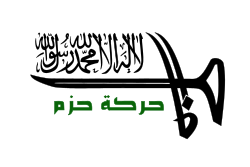
    The Hazzm Movement (Arabic: حركة حزم‎, Harakat Hazzm, meaning Movement of Steadfastness[3]) was an alliance of moderate Syrian rebels.[1] The group has been supplied BGM-71 TOW anti-tank missiles[12] in a covert CIA program launched in 2014, scores of the groups fighters also received U.S. military training in Qatar under the same program.[13]
    Some of the groups currently involved in the alliance were part of the Farouq Brigades.[12] The groups that became the Army of Mujahedeen were originally going to join the Hazzm Movement.[14] The previous incarnation of the group, called Harakat Zaman Mohamed (The movement of the time of Muhammad), was supported by the Syrian Muslim Brotherhood.[14]
    In October 2014, Al-Nusra Front began attacking positions of Hazzm in Idlib Province, overrunning bases and seizing weapon stores, due to it's perceived closeness to the United States.[13] Following the loss of men and weapons to Nusra, the Idlib branch of Hazzm stopped receiving funds from the CIA in December 2014, funds to the Aleppo branch continued.[15] In January 2015, Al Nusra attacked Hazzm Movement positions in Aleppo province. The Hazzm Movement reacted by joining the Levant Front, a large alliance of prominent Aleppo-based Islamist rebel groups; the alliance urged al Nusra to resolve its dispute with the Hazzm Movement by negotiating with the Levant Front.[16]
    On 1 March 2015, after several heavy clashes with the Al-Nusra Front, the Hazzm Movement announced they were dissolving and joining the Levant Front.[2]

    Thursday, February 19, 2015

    Aleppo: Syrian Army downs 2nd al Nusra Front drone in 4 Months in the north of Aleppo

    IMG_3464
    BY LEITH FADEL ON JANUARY 19, 2015 MIDDLE EAST
    Earlier today, the Syrian Arab Army (SAA) downed a reconnaissance drone that belonged to the Al-Qaeda linked “Al-Nusra Front (Jabhat Al-Nusra) in the northeastern Aleppo village of Sayfaat. The reconnaissance drone was seen by the SAA flying over northeastern Aleppo, capturing images of the latter from a low altitude; this made the drone easy to spot, despite its relatively small size. This is the second drone that the Syrian Army has downed in the Aleppo Governorate over the last 4 months.

    The Al-Nusra Front – backed by Jaysh Al-Mujahiddeen – attempted to infiltrate into the Al-Zahra Association Quarter in western Aleppo, attacking the SAA and National Defense Forces from the western perimeter. The infiltration attempt was thwarted after the Al-Nusra Front and Jaysh Al-Mujahiddeen were caught in the open and subsequently pounded by loyalist gunfire that resulted in their withdrawal.

    In southern Aleppo, the SAA and NDF continued their offensive at Al-‘Amariyya, targeting the Islamic Front’s largest militia “Harakat ‘Ahrar ‘Ahrar Al-Sham” (Liberators of the Levant Movement) in the Central District. The majority of firefights the loyalist experienced were reported from the Al-‘Amariyya-Sheikh Sa’eed Road in southern Aleppo; this front has recently expanded since the arrival of reinforcements.

    Also in southern Aleppo, the SAA was able to obstruct a counter-offensive by the militants of Harakat ‘Ahrar Al-Sham at Bastaan Al-Qasir (Al-Qasir Orchards) after almost 72 straight hours of non-stop fighting. According to a military source, Harakat ‘Ahrar Al-Sham suffered an imperative defeat in this area, due in large part to the significant casualties they experienced during the battle.

    The SAA conducted a number of raids on Islamic Front positions near Jabboul Lake that resulted in the destruction of 2 pick-up trucks mounted with 23mm anti-aircraft machine guns and the death of 9 militants from the latter.

    Firefights in the imperative village of Al-Bureijj located in northeastern Aleppo intensified on Monday morning, as both loyalist and rebel forces exchanged a barrage of gunfire and artillery shells in order to expand their control over enemy positions. Despite the fierce clashes, both sides were unable to gain any significant ground to create a map change.

    The Anti-Islamic State of Iraq and Al-Sham (ISIS) Coalition targeted a number of Al-Nusra Front hideouts in the western Aleppo village of Kafr Halab, destroying a multitude of vehicles and hideouts belonging to the latter in this area.

    Wednesday, February 18, 2015

    Obama to Give Jihadists the Ability to Order Airstrikes

    Obama to Give Jihadists the Ability to Order Airstrikes

    "Rebels" who pledged allegiance to ISIS to control American bombers in Syria

    But he won't give the Kurds heavy weapons

    obama-isis
    The Obama administration is preparing to equip the so-called “moderate” Syrian rebels with the ability to order U.S. air strikes despite the group’s admitted allegiance to the Islamic State.
    Members of the Free Syrian Army (FSA) will be provided with radios to call in strikes from American B-1B bombers as well as pickup trucks with mounted machine guns as the president puts the final touches on plans to train as many as 3,000 rebels in Jordan and Turkey by the end of 2015.
    “Negotiations have been concluded and an agreement text will be signed with the US regarding the training of the Free Syrian Army in the coming period,” said Turkish Foreign Ministry Spokesman Tanju Bilgic.
    The planes will reportedly use similar munitions to those seen in Afghanistan, targeting anything from small vehicles to tanks with 500 and 2,000-pound guided bombs.
    Aside from the Toyota Hi-Lux trucks, multiple groups of rebels will also be given mortars and possibly antitank weapons as well. The FSA has already been given US Tow missle a very high priced and very accurate anti tank missle system. These have already fallen iiinto ISIS #Daeshbag hands before. So we can expect it to happen again. 
    A senior military official speaking with the Wall Street Journal stated that the decision would likely emulate recent bombing campaigns against the Islamic State in Iraq.
    “The way we envision it, it would be very similar to Kobani,” the source said.
    Ludicrously refuting previous statements by claiming not to be at war with the Syrian government, U.S. officials alleged that air strikes would likely not be ordered against the Syrian army. But I think this is the foot in the door the West has been looking for to attack the Syrian government. Turkey wants that to happen now....  even before ISIS. But the US and most European countries want to get rid of ISIL before they even think about the Syrian government, at least that's what they tell us.
    Despite the Obama administration’s claims, countless intelligence and military officials have stated that the “moderate” rebels are essentially non-existent, with well over 90 percent being with terrorist groups or aligned in ideology.
    Just last September, a commander with the FSA admitted to fighting alongside several terrorist organizations in the region including the Islamic State.
    “We are collaborating with the Islamic State and the Nusra Front by attacking the Syrian Army’s gatherings in… Qalamoun,” Bassel Idriss, commander of an FSA-run rebel brigade, said. “Let’s face it: The Nusra Front is the biggest power present right now in Qalamoun and we as FSA would collaborate on any mission they launch as long as it coincides with our values.”
    Jamal Maarouf, the leader of the Syrian Revolutionary Front (SRF), also told reporters last April that his fighters regularly worked with Al Qaeda and Al-Nusra as well.
    During the same time period it was reported that “several factions within the FSA, including Ahl Al Athar, Ibin al-Qa’im,” decided to hand their weapons over to the Islamic State before pledging their allegiance to the group.
    An Islamic State fighter speaking with Al-Jazeera in 2013 revealed that the FSA regularly sold its weapons to them shortly after they would receive shipments from the U.S.
    “We are buying weapons from the FSA,” Abu Atheer said. “We bought 200 anti-aircraft missiles and Koncourse anti tank weapons. We have good relations with our brothers in the FSA.”
    Obama’s rebels and the Islamic State even went as far as to sign a non-aggression pact with one another in order to rally against the Assad government in late 2014.

    In fact, with thousands of rebels openly defecting and joining ranks with the Islamic State, President Obama was forced to brazenly repeal sections of U.S. law that banned the arming of known terrorist groups in order to keep weapons flowing.
    Obama’s actions spurred a major backlash within the military at the end of 2013, resulting in numerous U.S. troops taking to social media to post photos of themselves holding up signs stating that they would not fight on the same side as terrorists in Syria.
    Texas Senator Ted Cruz presciently warned in 2013 that President Obama was quickly turning the United States into Al Qaeda’s air force as the situation in Syria continued to intensify.
    “We should be focused on defending the United States of America,” Cruz said. “That’s why young men and women sign up to join the military, not to, as you know, serve as Al Qaeda’s air force.”