Search This Blog

Showing posts with label iranian. Show all posts

Sunday, March 15, 2015

Iraq militia leader hails Iran’s support

 In a battlefield interview near Tikrit, where Iraqi forces are fighting to retake Saddam Hussein’s hometown from the militants of the so-called Islamic State, commander Hadi al-Amiri criticized those who “kiss the hands of the Americans and get nothing in return.”
Iraqi forces entered Tikrit for the first time Wednesday from the north and south. On Friday, they waged fierce battles to secure the neighborhood of Qadisiyya and lobbed mortar shells and rockets into the city center, still in the hands of IS militants. Iraqi military officials have said they expect to reach central Tikrit in two to three days.
The Iranian-backed Shiite militias have played a crucial role in regaining territory from the Sunni extremists of the Islamic State group, supporting Iraq’s embattled military and police forces.
An Iraqi government official told The Associated Press that Iran has sold Baghdad nearly $10 billion in arms and hardware, mostly weapons for urban warfare like assault rifles, heavy machine-guns and rocket launchers. The official spoke on the condition of anonymity because he was not authorized to brief the media.
In November, President Barack Obama authorized the deployment of up to 1,500 more U.S. troops to bolster Iraqi forces, which could more than double the total of American forces in Iraq to 3,100. The Pentagon has made a spending request to Congress of $1.6 billion, focusing on training and arming Kurdish and Iraqi forces. According to a Pentagon document prepared in November, the U.S. is looking to provide an estimated $89.3 million in weapons and equipment to each of the nine Iraqi brigades.
The U.S.-led coalition of eight countries has launched more than 2,000 airstrikes in Iraq alone since August 2014, and the U.S. is also hitting the militant group from the air in Syria. Iraqi and U.S. officials have acknowledged the role airstrikes have played in rolling back the militants, saying the air campaign was an essential component in victories at the Mosul Dam, in Amirli, and more recently, in the crucial oil refining town of Beiji.
But the U.S. is not taking part in the operation in Tikrit, with U.S. officials saying they were not asked by Iraq to participate.
Al-Amiri, the Shiite militia commander who also is head of the Badr Organization political party, said that “help from Iran is unconditional.”
Previous Page|1|2|3|Next Page| Comments

Saturday, February 21, 2015

Iran unveils replica of the U.S. stealth drone that they captured in 2011


The above video is footage of Iran's replica of the stealth U.S. drone that they captured in December 2011. Iran has reverse engineered the Drone and is now flying the replica Drone. 


Video of captured U.S. stealth spy drone in Iran


Iran–U.S. RQ-170 incident

On 4 December 2011, an American Lockheed Martin RQ-170 Sentinel unmanned aerial vehicle (UAV) was captured by Iranian forces near the city of Kashmar in northeastern Iran. The Iranian government announced that the UAV was brought down by its cyberwarfare unit which commandeered the aircraft and safely landed it, after initial reports from Western news sources inaccurately claimed that it had been "shot down".[1] The United States government initially denied the claims but later President Obama acknowledged that the downed aircraft was a US drone and requested that Iran return it.[2][3]


Wednesday, February 11, 2015

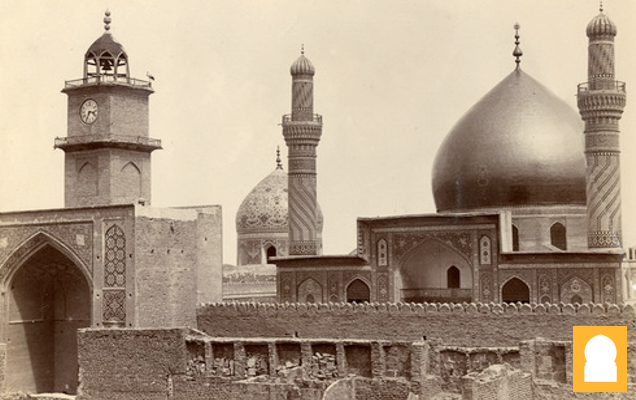
2nd Iranian Commander killed in Iraq defending Samarra Golden Dome

A commander of Iran’s Islamic Revolutionary Guards Corps (IRGC) has been killed in Iraq, Iranian media reported.
The Tasnim news agency, said to be affiliated with IRGC, says Reza Hosseini Moghadam was in Samarra to confront militants of the Islamic State (IS) when he was killed on February 7.
“He [Moghadam] was martyred in the vicinity of the Al-Askari [Shi’ite] shrine in Samarra,” Tasnim reported.
6gd
Hard-line news sites reported that Moghadam, who they said was a veteran of the 1980-1988 Iran-Iraq war, was killed by IS snipers and buried in Najaf.
Tasnim said Moghadam had requested in his last will to be buried in Wadi al-Salaam cemetery in Najaf.
Moghadam is the second senior IRGC member reported killed in Iraq in less than two months.
In December, the IRGC said one of its commanders, Brigadier General Hossein Taghavi, was killed while on a mission to advise the Iraqi Army and volunteers in Samarra. Taghavi was reportedly killed by a sniper.
Thousands of IRGC members attended his funeral in Tehran.
Ali Shamkhani secretary of Iran’s Supreme National Security Council said at his funeral: “Taghavi and people like Taghavi gave their blood in Samarra so that we do not give our blood in Tehran.”
Tehran has acknowledged sending advisers to Iraq to help combat the IS militant group and to Syria to help fight the IS and other antigovernment forces battling the regime of President Bashar al-Assad.
Iran is not a member of the U.S.-led coalition forces attacking IS targets in Iraq and Syria.
Both Iran and the U.S. have denied cooperating or any coordination of their activities in the fight against IS.
But officials have said that the issue has been discussed on the sidelines of the nuclear talks aimed at finding a lasting solution that would prevent Iran from acquiring nuclear weapons.
Via RFE/RL
Copyright (c) 2015. RFE/RL, Inc. Reprinted with the permission of Radio Free Europe/Radio Liberty, 1201 Connecticut Ave NW, Ste 400, Washington DC 20036.

Saturday, March 1, 2014

The Case For And Against Intervening In Syria

The Case For And Against Intervening In Syria

FOR:
•It’s the right thing to do, maybe
•Let American people finally sleep at night after years of being 
tormented by thoughts of innocent Syrians dying
•Will put thousands of honest, diligent American Tomahawk cruise 
missiles back to work
•We’re the good guys
•Syrian people deserve to be free of a psychotic, oppressive dictator 
for a few weeks
•Moral obligation to our defense industry
•Footage of missiles being launched off decks of ships, green
night-vision images, aerial shots of explosions—all that good stuff
•We have plenty of money, a fresh, rested military—why not?
•Be nice to throw Kathryn Bigelow* a bone
•Chance for Obama to put an exclamation point on an already great year
•It’s been a while since we did one of these things

AGAINST:
•Someone might be hurt, or even die
•Could turn Russia and Iran against U.S.
•History
•Fear of setting a precedent of military action without U.N. approval
•Slight, really almost infinitesimal chance that intervention might be a
completely ineffectual act that even further destabilizes the region,
touching off massive anti-American sentiment while allowing jihadist
radicals to take power
•Painful memories of intervening in Rwandan genocide (Hah!)
•It’s hard
•Bashar al-Assad just had a baby. A baby!
•Bush invaded a foreign country. If Obama invades a foreign country, he
will be like Bush. It is not good to be like Bush.
•If we ever want to patch things up with Assad, this won’t exactly make
that conversation a cake walk
•Situation might work itself out


Read More about the Syrian photographer here:


https://www.facebook.com/ashraf.zeinah.photography

https://www.facebook.com/ashraf.zeinah

https://www.facebook.com/ianbachusa/posts/10200407886827514?stream_ref=10

Tuesday, May 29, 2007

Is iran playing chess or checkers?

Iran has recently stated they may be willing to slow, reduce, or suspend production of enriched uranium (See AP story here). Currently Iran’s biggest problem is inflation, approx. 30% a year for past couple years. If they continue it will cause more inflation. Iran still insists its program is for nuclear power and not weapons. The UN investigators have estimated approximately 5-7 years before the Iranian program yields results. If Iran does continue to try and go it alone, the inflation in Iran will get a lot worse. Iran’s leadership should note this and be aware that the more inflation the more the citizens will demand change of leadership. However, it is most likely anyone who does speak out will be killed or imprisoned for it. Also Al Qaeda has brought Algerians into Iran and doing the Bank Scams there now also. These are big fund raisers for Al Qaeda. But these unethical people most likely are targeting not just western countries but also the citizens of Iran. They have been doing it in Algeria for about 15 years and they know how to milk a country of its money. They do more than just bank scams. They do identity theft and also counterfeiting. Most the counterfeit money has traditionally been printed in Austria (yes that Beautiful small European country - Argh I hate them, and I am half german, but if you knew how Austria assists funding of Terrorists it is sick), Austria has the most secret of banking systems/accounts.

Iran Nuke Facilities

The Afghan freedom fighter Ahmed Shah Massoud talked about how he and the terrorists use this banking system to fund their wars and to cause inflation. Massoud fought the Taliban, ISI, and al Qaeda in Afghanistan. He was our best ally against the USSR in 1970s to 1980s. I have an interview I read where Massoud was asked about the inflation it was causing in Afghanistan (interview around 1999-2001). He admitted it was bad for the nation but cited that the al Qaeda and Taliban were all doing it also. But most of all Massoud had very little funding and for him was necessary to continue to fight the terrorists. During this time he had been pleading for international help for about 5 years but only just before his death did the USA approve to fund the money. We lost a great tactician and ally that day. Two days later al Qaeda attacked the USA on 9/11. Massoud was the best ally we could of had and best chance to win against the Taliban and Al Qaeda.

Tuesday, May 1, 2007

Iran agrees to join talks on insurgents

BAGHDAD — Iran agreed to participate with the United States and other countries in a conference about Iraq this week that aims in part to get surrounding countries to stop aiding the insurgency with bombs, guns and terrorists.

Prime Minister Nouri al-Maliki told an Iranian envoy that the persistent violence in Iraq — some of it carried out by the Shiite militias that Iran is accused of arming — could spill over into neighboring countries.

It was al-Maliki's office that announced that Iranian President Mahmoud Ahmadinejad had telephoned to say a delegation from his country would attend the conference.

Iraq's other neighbors, as well as Egypt, Bahrain and the five permanent U.N. Security Council members have agreed to attend the meeting Thursday and Friday in the Egyptian resort of Sharm el-Sheik.

The conference will include U.S. Secretary of State Condoleezza Rice. In Washington, Rice did not rule out a meeting with the Iranians.